Ad This article contains affiliate links. If you buy through them, GadgetHub may earn a commission at no extra cost to you. Affiliate disclosure
Products are chosen independently; commissions do not change what we recommend.
Solar panels · Power stations
Your 400W of Solar Panels Are Delivering 250W — Here Is Where the Other 150W Went and How to Get It Back
Panel ratings assume lab conditions your campsite never provides. MPPT voltage windows, series vs parallel wiring, hot cells and undersized cables each take a cut. Here is how each loss works, how big it typically is, and how to find the one actually throttling your solar input.
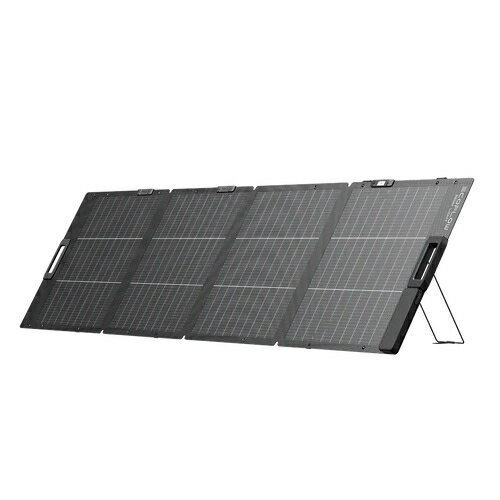
The short answer
Your panels are almost certainly fine. The missing watts are going to one or more of these, in roughly this order of likelihood:
- The rating was never a real-world number. Panels are rated under lab conditions your driveway never reproduces. Seeing 70–85% of the label in strong sun is normal, not a defect.
- Your wiring puts the array outside the MPPT’s happy zone. Series and parallel connections produce completely different voltage and current profiles, and the wrong one can cost you far more than any other item on this list.
- Heat is derating the cells. Hot panels produce measurably less, and the hottest part of the day is when it shows.
- Your cables are taxing every amp. Long or thin extension runs lose power to resistance, and adapters add their own small penalties.
- You have hit the station’s input cap. If the charge controller is rated to accept less than the array can supply, the extra wattage is clipped and no amount of sun will change it.
The fixes, in the same order: recalibrate expectations, re-check the wiring math against your manual, keep panels cool and ventilated, shorten and thicken the cable run, and read the input spec before buying another panel. The rest of this article walks through each one with enough numbers to diagnose your own setup.
Your 400W was never 400W
Every solar panel is rated at Standard Test Conditions: irradiance of 1,000 watts per square meter, a cell temperature of 25°C, and a standardized light spectrum. This is a lab flash test, not a forecast.
Outdoors, all three assumptions break at once. Irradiance only approaches 1,000W/m² with the sun high in a clear sky and the panel aimed straight at it. A portable panel leaned against a cooler at a lazy angle might see 700–800W/m² at noon and far less in the morning. And a panel sitting in the sun that delivers 1,000W/m² is, by definition, being cooked well past 25°C.
The practical consequence: a portable array delivering on the order of 70–85% of its label in good conditions is performing normally. If your 400W of panels shows 300–330W at solar noon, aimed well, in cool weather — there is nothing to fix. The rest of this article is for when the number is meaningfully below that.
The MPPT window: where whole panels disappear
Between your panels and your battery sits an MPPT charge controller — Maximum Power Point Tracking. Its job is to continuously find the voltage at which the array produces the most power. It is good at that job, but only inside its designed operating window.
Every power station publishes three numbers for its solar input, usually buried in the manual:
- A voltage window — commonly somewhere in the range of roughly 11–60V on portable stations, though it varies widely by model and size.
- A maximum input current — often on the order of 10–15A per port.
- A maximum input wattage — the most the controller will accept regardless of what the array offers.
Your panels also publish two voltages: Vmp, the operating voltage at maximum power, and Voc, the open-circuit voltage with nothing connected. Voc is always higher — and it rises further in cold weather, which is why a series string that was safe in August can trip a fault on a frosty October morning.
Here is where arrays go wrong:
- Voltage too low. In weak light, or with a single small panel feeding a station that wants more voltage, the array can sag below the MPPT’s minimum and charging stops entirely — zero watts from panels that are visibly in the sun.
- Voltage too high. A series string whose combined Voc exceeds the input ceiling will at best trigger a protective shutdown. At worst it damages the input stage. This is the one mistake in this article that can cost you hardware.
- Current beyond the cap. A parallel array offering more amps than the port accepts is simply clipped. Not dangerous on a typical MPPT input, but every amp above the cap is wattage you paid for and cannot use.
Series vs parallel: one wiring choice, half your output
Two identical 200W panels can be connected two ways, and the results are not equivalent.
Series (plug positive to negative, one chain): voltages add, current stays the same. Higher voltage helps the MPPT wake up earlier in the morning and reduces cable losses. The costs: combined Voc must clear the input ceiling with cold-weather headroom, and shade becomes contagious — shadow on one panel drags down the entire string, because the same current must flow through every panel in the chain.
Parallel (positive to positive via a branch connector): currents add, voltage stays the same. Each panel works independently, so partial shade only hurts the shaded panel. The costs: you can hit the port’s current cap, and the doubled current makes cable losses four times worse over the same wire, since resistive loss scales with the square of current.
The rule of thumb for portable setups: series when the voltage window allows it and shade is avoidable; parallel when shade is unpredictable or the voltage ceiling is tight. Either way, do the arithmetic with the numbers printed on your specific panels and your specific station — this is one place where “it fits the connector” does not mean “it works.”
If you are expanding an existing setup, matching panels makes the math clean. Mismatched panels can be combined, but series strings run at the weakest panel’s current and parallel pairs should agree on voltage, so identical panels waste the least.
Check portable solar panels (200W class) on Amazon
Heat: the loss that grows all afternoon
Solar cells lose efficiency as they warm, and the label assumes they never do. Monocrystalline panels typically carry a temperature coefficient in the range of −0.3% to −0.4% per degree Celsius above 25°C. Cells in direct sun commonly run 20–30°C above ambient air — so on a 30°C summer day, cell temperatures around 55–60°C are ordinary, and that alone removes on the order of 10–15% of rated output.
This is why solar harvest often peaks in late morning rather than at the hottest hour, and why a crisp, bright autumn day can out-produce a July scorcher.
What actually helps: prop panels up so air moves behind them rather than laying them flat on hot ground or a car roof, and use ground-deploy stands instead of pressing panels against heat-soaked surfaces. Bifacial panels such as EcoFlow’s 220W design add a rear face that collects reflected light — a genuine bonus over bright ground, and the elevated mounting it encourages also helps with cooling.
Cables and connectors: the tax on every foot
Every meter of cable between panel and station has resistance, and power lost to resistance rises with the square of the current. A short, thick run is nearly free. A long, thin run feeding a high-current parallel array is not — several percent of your harvest can disappear into warm wire, and in marginal light the added voltage drop can push the array below the MPPT’s minimum and stall charging entirely.
Three practical rules:
- Shortest run that reaches the sun. Move the station closer before buying longer cables.
- When you must go long, go thick. 10AWG is the sensible default for extension runs in this class; thinner bargain cables are where the losses hide.
- Count your connectors. Every adapter and branch joint adds a small contact resistance, and a corroded or half-seated MC4 adds more than its share. Fewer, cleaner connections win.
Most rigid and many folding panels terminate in MC4 connectors, while power stations take MC4, XT60, DC7909 or a proprietary plug depending on brand — so an adapter is often unavoidable. Buy a decent one and treat it as part of the system, not an afterthought.
Check MC4 extension cables on Amazon
Check solar connector adapters on Amazon
Find your bottleneck in ten minutes
Your power station’s display is a free diagnostic tool. Work through this once:
- Read the input screen at solar noon. Note watts, and volts if your station shows them. This is your baseline.
- Test one panel alone, plugged straight in. If a single panel delivers a normal fraction of its rating, the panel and the sun are fine — your loss is in the combination.
- Remove the extension cable. If watts jump when the station sits at the panel’s feet, the cable run was your tax.
- Check the wiring math. Add Voc values for series or rated amps for parallel, and compare against the manual’s input spec. An array sitting outside the window explains both zero-watt mysteries and clipped ceilings.
- Compare a cool morning against a hot afternoon. If output sags as the day heats up despite good sun, you are watching temperature derating, not a fault.
- Look for the flat-top curve. Input that rises during the morning and then pins at one exact number for hours is sitting on the station’s input cap. More panels cannot help; only a station with a bigger input can.
Who should not spend money on this
An honest word before the shopping links: several common situations need no purchase at all.
- Your station’s input cap is already the bottleneck. If the controller accepts 220W and your 400W array delivers a rock-steady 220W, the system is working perfectly. More panels, thicker cables and clever wiring buy you nothing.
- You are seeing 75–85% of rated wattage in good sun. That is the physics working as designed. Save the money.
- Your loads are small. Phones, lights, a laptop and a 12V fridge on a weekend trip are comfortably served by a single modest panel with the cable it came with. Array design matters when you are chasing hundreds of watt-hours per day, not tens.
- Your cable run is short. A ten-foot factory cable does not need a 10AWG upgrade. Voltage drop is a long-run, high-current problem.
- The panel lives on a balcony that gets two hours of sun. No wiring topology fixes shade and orientation. Placement first, hardware second.
Buy more panel, better cable or an adapter only after the checklist above has pointed at a specific loss — that is the difference between fixing a bottleneck and moving it.
Caveats
Voltage windows, current limits and input caps vary widely between models and even between ports on the same station — the numbers in this article are typical ranges, and your manual is the only authority for your hardware. Temperature coefficients and real-world output fractions are likewise typical published figures, not measurements of any specific panel.
This article covers low-voltage portable solar equipment connected to a power station’s designed solar input. Anything involving your home’s fixed wiring, rooftop installation or grid connection is a different world with real safety and legal requirements — for that, consult a licensed electrician and your utility.
Related guides
Frequently Asked Questions
- Q: Can I plug two solar panels into one power station?
- A: Usually yes, but the wiring decides everything. Series wiring adds the panels' voltages together; parallel wiring adds their currents. Your power station's solar input accepts a specific voltage window and a maximum current, both printed in the manual. Two panels in series can exceed the voltage ceiling of a smaller station, which at best shuts the input down and at worst damages it. Add up the open-circuit voltages for series, or the rated currents for parallel, and check both against the spec sheet before you connect anything.
- Q: Why does my solar input drop in the afternoon even in full sun?
- A: Heat. Panel ratings assume a 25°C cell temperature, but cells in direct summer sun commonly run 20–30°C hotter than the air around them. With a typical temperature coefficient in the range of −0.3% to −0.4% per degree above 25°C, a hot afternoon quietly removes on the order of 10–15% of rated output. Cool, bright, breezy days — not heat waves — are when panels do their best work.
- Q: Do long extension cables really lose that much power?
- A: They can. Voltage drop grows with cable length and with current, and thin wire makes it worse. A long run of thin cable feeding a high-current parallel array can eat several percent of your harvest, and in marginal light it can drag the voltage below the MPPT's working window entirely. Thicker 10AWG cable, the shortest run that reaches the sun, and series wiring (higher voltage, lower current) all reduce the loss.
- Q: Will connecting more panel wattage than my station's rated input damage it?
- A: Wattage overage and voltage overage are different problems. Most MPPT charge controllers simply cap how much current they draw, so extra rated wattage is typically clipped, not dangerous — some manufacturers even endorse modest over-paneling. Exceeding the maximum input voltage is another matter: that can damage the input stage, and cold weather pushes open-circuit voltage higher than the label suggests. Check your manual's Voc ceiling, leave headroom for cold mornings, and when in doubt ask the manufacturer.
- Q: Are bifacial panels worth it for portable use?
- A: Sometimes, modestly. A bifacial panel's rear face collects light reflected off the ground, which helps most over bright surfaces — sand, light-colored concrete, snow. Over grass or dark ground the rear-side gain is small. Treat the bifacial bonus as a nice extra rather than a number to plan around, and prioritize front-side orientation and shade-free placement first.